
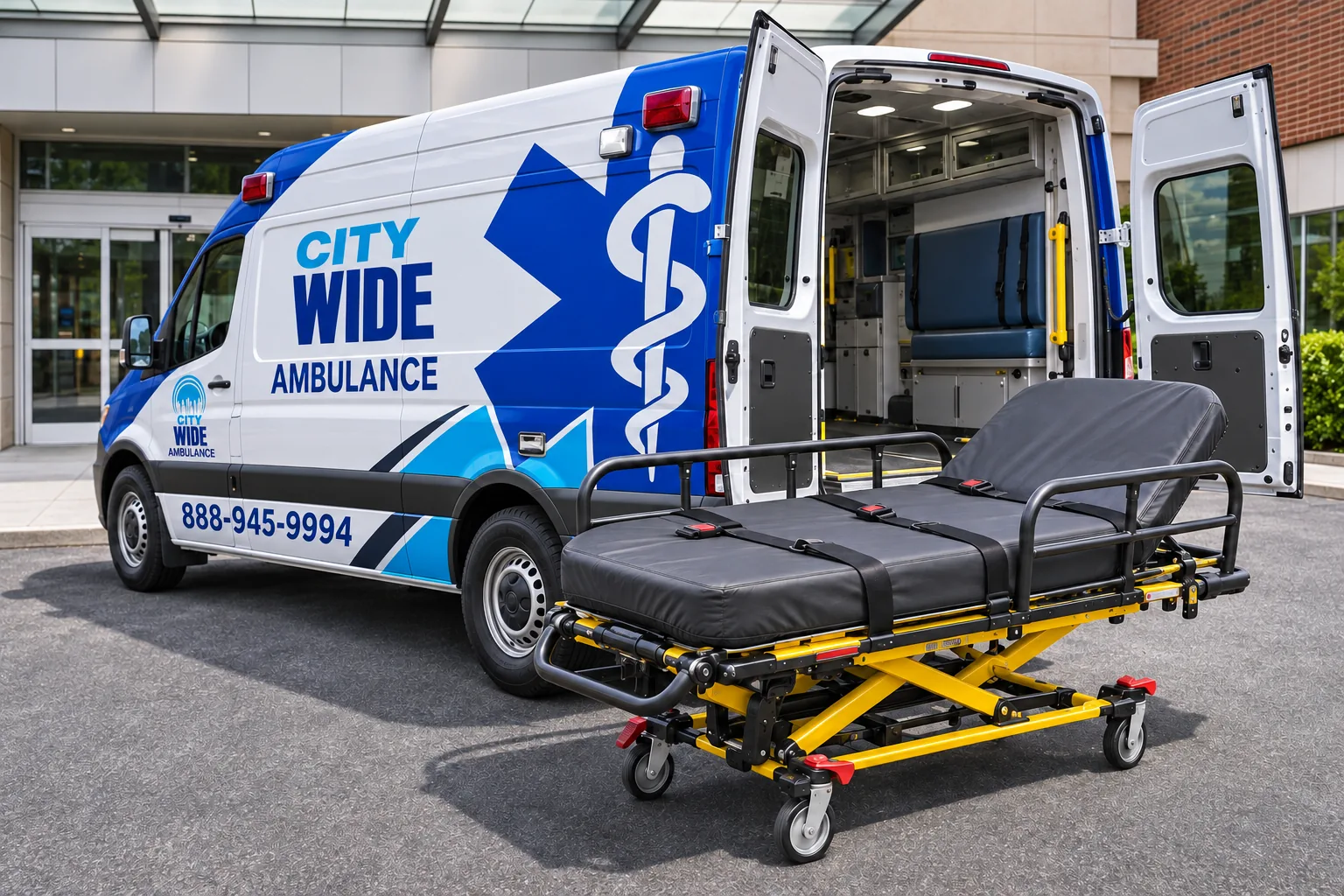
Bariatric transport, planned around the patient.
Larger patients need the right stretcher, enough crew and a plan made before anyone arrives. We arrange all three by phone.
| Crew | Sized to the move; additional crew members when needed |
|---|---|
| Equipment | Bariatric-rated stretcher and lifting aids matched to the patient |
| Level of care | Available as BLS ambulance or stretcher transport |
| Typical trips | Discharges, transfers, appointments and procedures |
| Booking | By phone. Advance notice helps us send the right crew and equipment |
What we ask when you call
A bariatric move goes well when it is planned. Dispatch will ask a few practical questions so the crew arrives with what they need:
- The patient's approximate weight and height
- Whether the patient can help with the transfer at all
- Stairs, door widths, elevators and the route from the room to the vehicle
- Whether the patient needs monitoring or oxygen on the way
Dignity is part of the job
No one should be made to feel like a problem to be solved during a bariatric transfer. Our crews explain each step, move at the patient's pace, and keep them covered and comfortable. The plan made on the phone is what keeps the move calm.
Coverage
Bariatric transport is billed at the level of service provided, and plans differ on what they require. Dispatch checks before the trip. See insurance and billing.
Why bariatric transport is planned differently
A standard stretcher and a two-person crew are built for an average adult. For a larger patient, the stretcher has to be wider and rated for more weight, the lift has to be shared among more people, and the route has to be checked for width and for floors and ramps that can take the load. None of that can be improvised at the bedside, which is why we ask our questions before the crew leaves the station.
At a hospital or facility
Tell us the unit, whether the patient is on a bariatric bed, and whether staff can help with the transfer. Hospitals usually have lifts and enough room. The limiting points tend to be elevators and the distance to the ambulance entrance.
At home
Homes are where planning matters most. Doorways, hallway turns, porches and steps all affect the move. Measure the narrowest doorway on the route if you can, and tell dispatch about every step between the bed and the street. Our guide on moving a patient through stairs and tight spaces explains what helps.
Questions worth asking any provider
Whoever you book with, ask what equipment they will bring, how many crew members will come, and whether the price is confirmed in advance. We have set these out in bariatric transport: questions to ask before booking.
Related guides
- Bariatric transport: questions to ask any provider before booking
- Stairs, narrow halls and tight elevators: how crews move a patient safely
- BLS ambulance or stretcher transport: how the decision is made
About bariatric transport.
Other services
How much notice do you need for a bariatric transport?
As much as you can give. Scheduling ahead lets us assign the right crew size and equipment. Call even if it is short notice and dispatch will tell you what is possible.
Do I need to know the patient's exact weight?
An honest estimate is enough. It decides which stretcher and how many crew members we send.
Is bariatric transport a different level of service?
No. It is BLS ambulance or stretcher transport carried out with bariatric equipment and additional crew when needed.
Can bariatric transport be arranged for a hospital discharge?
Yes. Ask the case manager to call as soon as discharge is being planned so the right equipment and crew can be scheduled.
Does bariatric transport cost more?
It can, because of the equipment and extra crew. Dispatch confirms coverage or gives a quote before the trip.

Tell us where, when and how the patient travels. We confirm the level of service and the details by phone.