
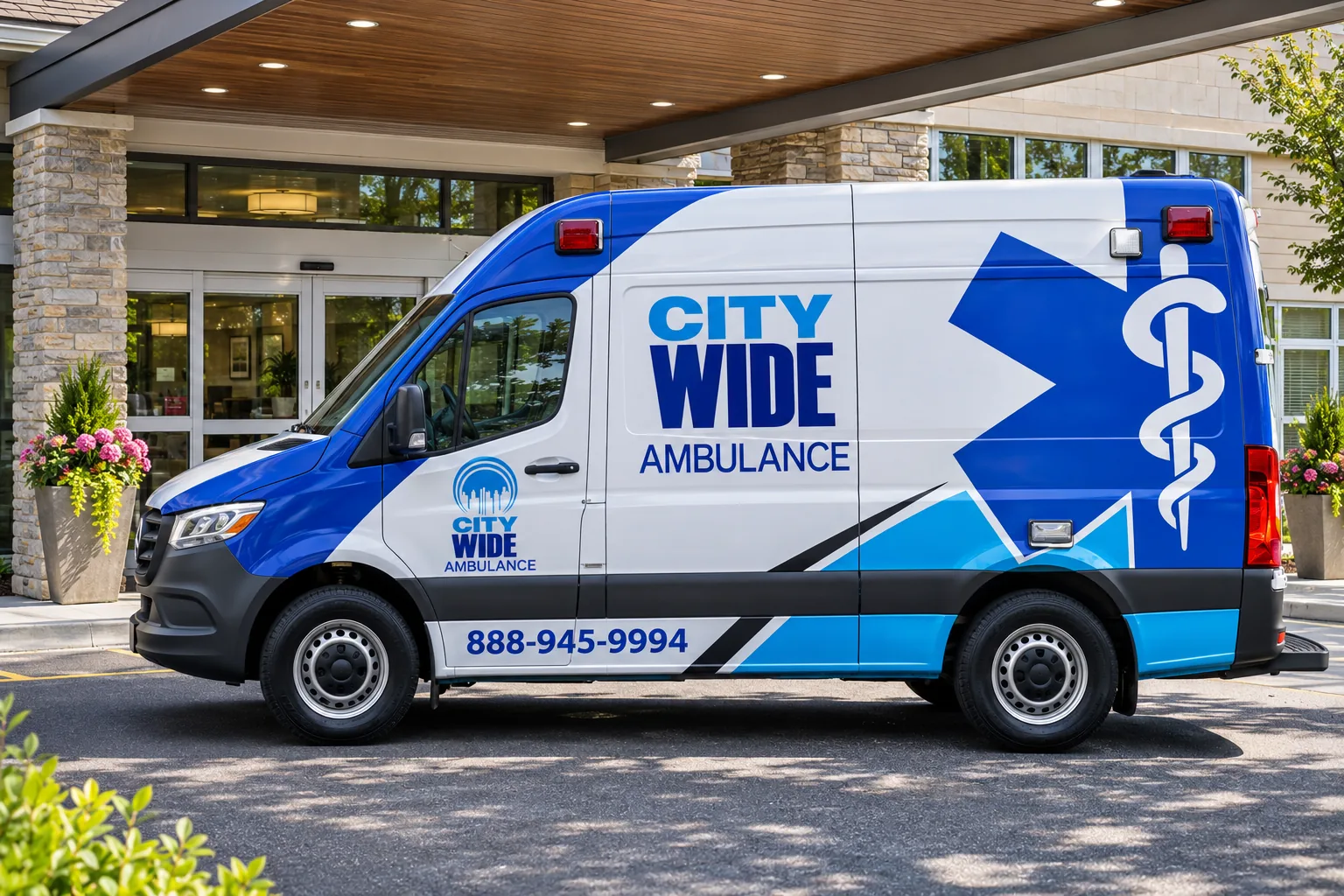
Interfacility transfers, handled end to end.
Moves between hospitals, skilled nursing facilities, rehabilitation and dialysis, with a proper handover at each end.
| Between | Hospitals, skilled nursing, rehabilitation, long-term acute care, dialysis, clinics |
|---|---|
| Levels available | BLS ambulance, stretcher and bariatric transport |
| Handover | Crew receives report at pickup and gives report at arrival |
| Scheduling | Scheduled, same day, and recurring |
| Booking | By phone, any hour |
Non-emergency transfers
Citywide handles transfers of stable patients: a step-down from a hospital to skilled nursing, a return to a facility after a procedure, a move to rehabilitation, a round trip to an outpatient appointment. Patients who need paramedic or critical-care transport need a provider at that level, and dispatch will say so if that is what the patient requires.
What makes a transfer go smoothly
- A named contact at the sending and receiving facility
- The receiving bed or appointment confirmed before pickup
- The patient's mobility, oxygen and isolation status shared at booking
- Transfer paperwork ready to travel with the patient
Accounts for facilities
Facilities that transfer patients often can set up an account: one phone number, standing schedules for recurring trips, and consolidated invoicing. See for facilities or request a quote.
Typical transfers
- Hospital to skilled nursing or rehabilitation after an inpatient stay
- Skilled nursing to a hospital outpatient department for a procedure, and back
- Facility to a specialist clinic or imaging center
- Between two facilities when a patient's care needs change
- Long-term care to dialysis on a standing schedule
What the sending facility does
The sending facility confirms the receiving bed or appointment, prepares the transfer paperwork and gives the crew a report on the patient. For an ambulance transfer billed to insurance, the physician's statement of medical necessity should be ready before the crew arrives. See the physician certification statement, explained.
What the crew does
The crew takes report at the bedside, moves the patient, and travels with them. On arrival they bring the patient to the assigned room or department, help with the transfer to the bed or table, and hand over to the receiving staff along with the documents sent.
Round trips and waits
For an outpatient appointment the same booking can cover the trip there and the return. Tell dispatch how long the appointment is expected to take so the return is planned rather than requested from scratch.
Related guides
- Non-emergency ambulance for a skilled nursing resident: the paperwork that prevents a denial
- Same-day discharge transport: what case managers can do before noon
- The physician certification statement, explained
About interfacility transfers.
Other services
Do you take patients who need a paramedic or nurse on board?
No. Citywide is a Basic Life Support provider. If a patient needs advanced or critical-care transport, the sending physician should arrange a provider at that level.
Can you bring a patient back after an appointment?
Yes. Round trips and wait-and-return trips can be booked in one call.
What does interfacility transfer mean?
The movement of a patient from one healthcare facility to another, for example from a hospital to a skilled nursing facility.
Can a facility set up recurring transfers?
Yes. Standing schedules can be set up once for repeating trips.
Who pays for an interfacility transfer?
It depends on the patient's coverage and the reason for the transfer. Dispatch tells facility staff what each payer requires before the patient moves.

Tell us where, when and how the patient travels. We confirm the level of service and the details by phone.