
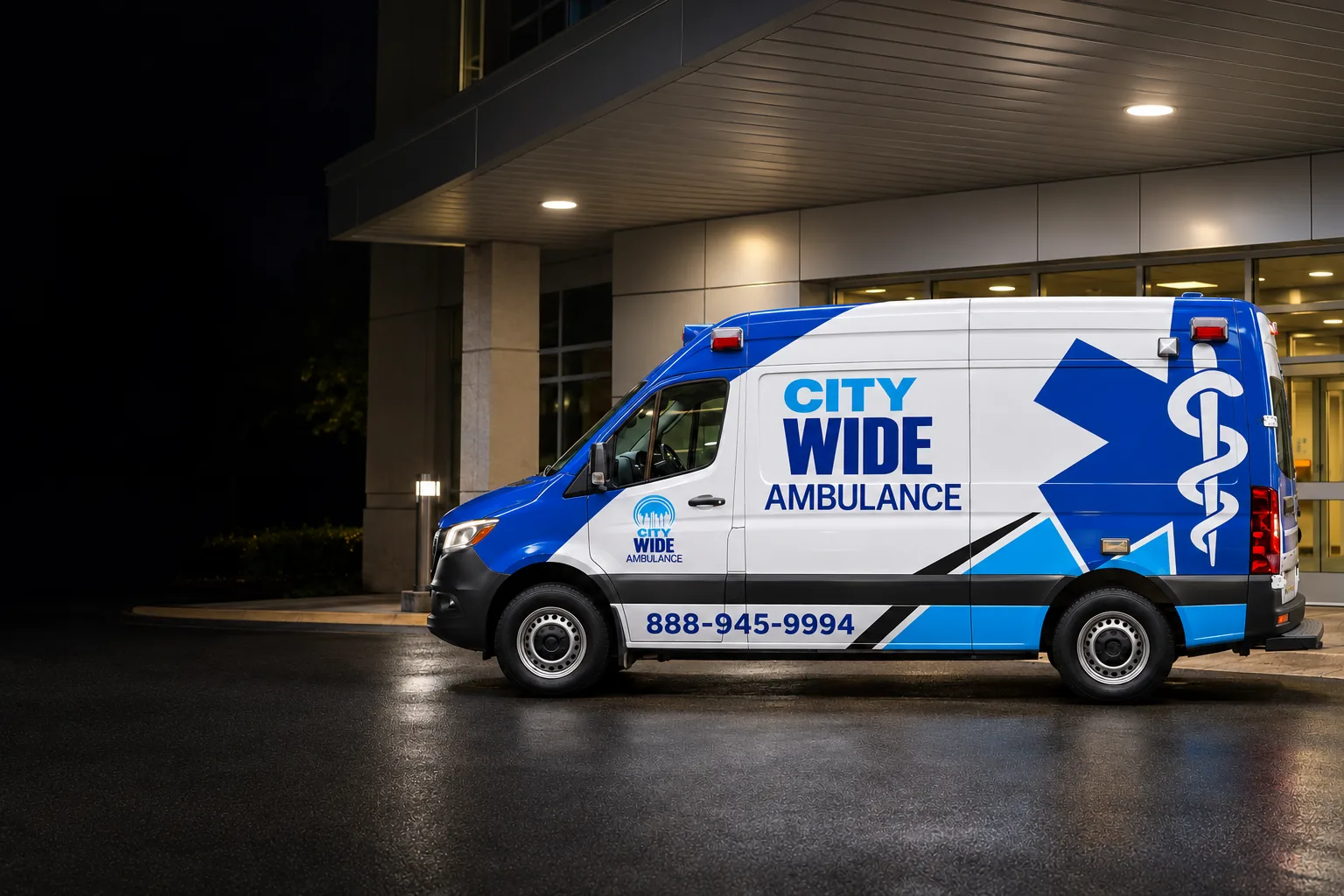
BLS ambulance transport, without the emergency.
A licensed Basic Life Support ambulance and an EMT crew for patients who are stable but need monitoring, oxygen or hands-on care on the way.
| Crew | Two certified Emergency Medical Technicians |
|---|---|
| Patient travels | On an ambulance stretcher, with an EMT beside them for the whole trip |
| Care on the way | Basic Life Support: vital-sign monitoring, oxygen, positioning and comfort |
| Typical trips | Hospital discharges, facility-to-facility transfers, appointments and procedures, dialysis |
| Booking | By phone, any hour. Scheduled in advance or same day |
When a BLS ambulance is the right call
Some patients are well enough to leave the hospital but not well enough to ride in a car. A BLS ambulance covers that gap. It is the usual choice when a physician decides the patient needs a trained crew watching them in transit.
- The patient needs oxygen or vital-sign monitoring during the ride
- The patient cannot sit upright safely and needs care, not only a place to lie down
- A physician has ordered ambulance transport for a discharge or transfer
- The patient's condition could change on the way and someone trained should be there
If the patient only needs to travel lying down and does not need care on the way, stretcher transport is usually the better fit.
What happens on the day
The crew comes to the bedside, not the curb. They introduce themselves, check the paperwork with the nurse or family, move the patient onto the stretcher, and secure them in the ambulance. One EMT rides in the back with the patient. At the destination the crew brings the patient inside, helps them into the bed or chair, and gives a handover to the receiving staff.
Paperwork for non-emergency ambulance trips
Insurers generally pay for a non-emergency ambulance only when it is medically necessary, and many ask for a physician's written statement saying so. If you are a case manager or discharge planner, dispatch will tell you exactly what is needed for the patient's plan when you call. See insurance and billing.
Who orders a BLS ambulance, and how
Most BLS trips start with a clinician. A hospital physician writes a discharge order, a skilled nursing facility arranges a visit to a specialist, or a physician's office decides a patient at home cannot travel any other way. The case manager, nurse or family member then calls dispatch.
You can also call first and work backward. Describe the patient, and dispatch will tell you whether the trip sounds like a BLS ambulance or stretcher transport, and what the patient's physician would need to confirm.
What the crew can and cannot do
Basic Life Support is a defined level of care. The two EMTs on a Citywide ambulance check and record vital signs, give oxygen, keep the patient safely positioned, and watch for changes throughout the ride. They are trained to recognize when a patient is getting worse and to get that patient emergency care.
EMTs do not give most medications or manage devices that require a paramedic or a nurse. A patient who needs that level of care in transit needs advanced or critical-care transport, which Citywide does not provide. If that is what the patient needs, dispatch will tell you so plainly.
What to have ready when you call
- Where the patient is now, including the unit and room
- Where the patient is going, and that the destination is expecting them
- The time the patient will be ready, even if it may change
- How the patient is doing: oxygen, mobility, alertness, isolation precautions
- The patient's insurance, and who ordered the transport
- Stairs or access problems at either end
How a BLS trip is paid for
Insurers generally pay for a non-emergency ambulance when the patient's condition requires one and the paperwork shows it. For Medicare, that usually means a physician's written statement. Medi-Cal plans and most commercial plans have their own approval steps. Dispatch checks coverage before the trip and, where a plan does not apply, gives a private-pay quote first.
Read more in does Medicare cover a non-emergency ambulance ride, or see how medical transport is priced.
Related guides
- BLS ambulance or stretcher transport: how the decision is made
- Does Medicare cover a non-emergency ambulance ride?
- The physician certification statement, explained
About BLS ambulance.
Other services
Is a BLS ambulance the same as calling 911?
No. Citywide provides scheduled and same-day non-emergency transport. If someone has chest pain, trouble breathing, signs of a stroke, severe bleeding or any other emergency, call 911.
Who decides that a patient needs an ambulance instead of a stretcher van?
The patient's physician or the discharging facility. If you are not sure, call dispatch and describe the patient's condition and needs; we will tell you which level of service fits and what the insurer is likely to require.
Can a family member ride along?
Usually, yes. One family member can ride along. Tell dispatch when you book so the crew expects them.
What does BLS stand for?
Basic Life Support. It is the level of ambulance care provided by Emergency Medical Technicians, as distinct from Advanced Life Support, which is provided by paramedics.
Can a BLS ambulance take a patient who is on oxygen?
Yes. Giving and monitoring oxygen is part of Basic Life Support. Tell dispatch the patient's oxygen needs when you book.
Can I book a BLS ambulance for a doctor's appointment?
Yes, when the patient's condition requires an ambulance. Insurers often do not cover ambulance trips to a physician's office, so ask dispatch about coverage and a private-pay quote.

Tell us where, when and how the patient travels. We confirm the level of service and the details by phone.