
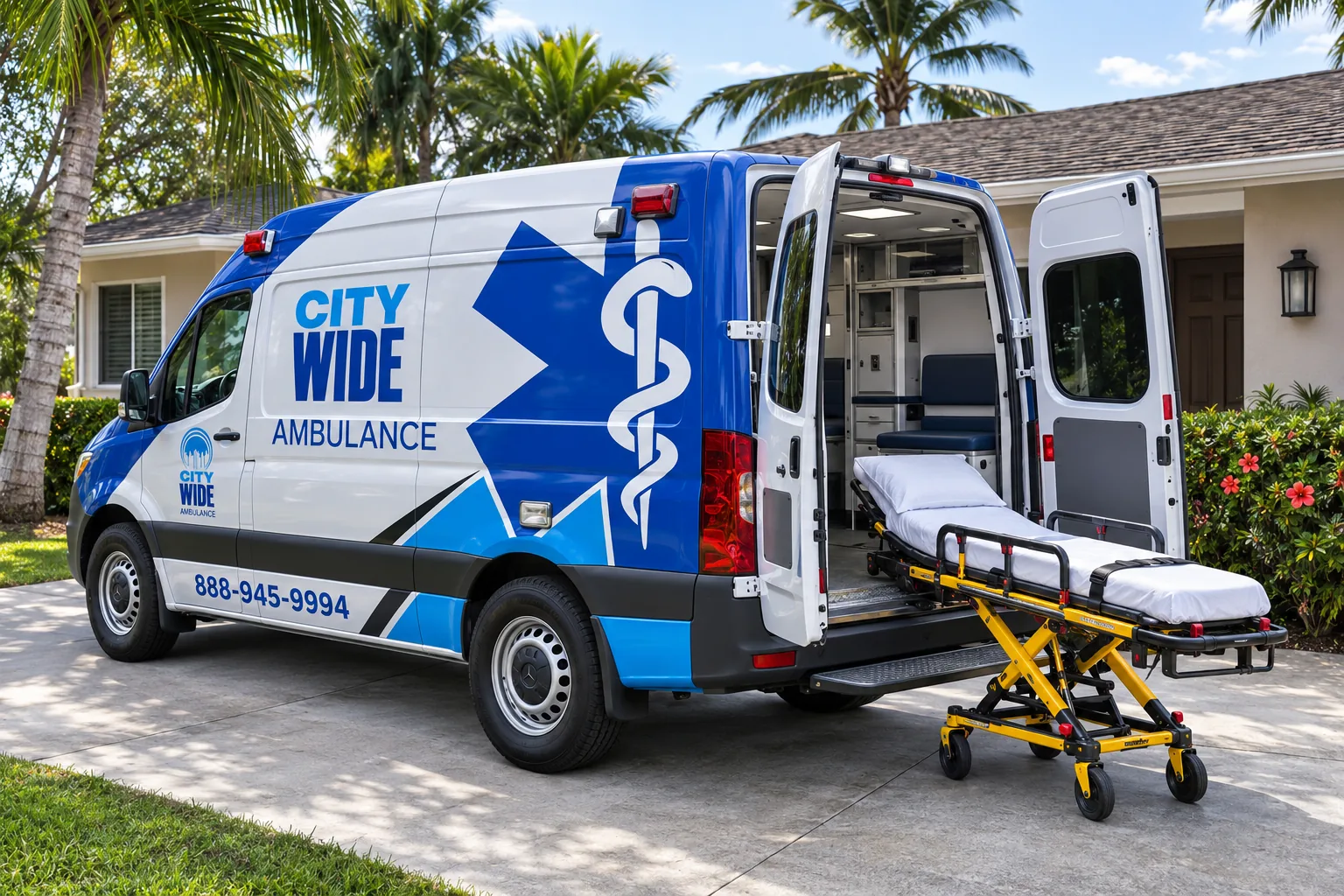
Stretcher transport for patients who travel lying down.
Bed-to-bed stretcher transport, also called gurney transport, for people who are medically stable but cannot sit in a car or wheelchair for the ride.
| Crew | Two certified Emergency Medical Technicians |
|---|---|
| Vehicle | A Citywide ambulance, the same vehicles used for BLS trips |
| Patient travels | Lying on a stretcher, secured for the whole trip |
| Care on the way | Safe lifting, positioning and comfort. No medical monitoring |
| Typical trips | Appointments, discharges home, moves between facilities, dialysis |
| Booking | By phone, any hour. Recurring trips can be set up once |
Who stretcher transport is for
Many people do not need an ambulance crew. They need two careful people, the right equipment, and a way to make the trip flat. Stretcher transport is for patients who:
- Are bed-bound or cannot sit upright for the length of the ride
- Are medically stable and do not need monitoring or oxygen managed by a crew
- Are going home from a hospital, to a skilled nursing facility, or to an appointment
- Need help with stairs, tight hallways or a transfer from bed to stretcher
If the patient needs oxygen, monitoring or care during the ride, a BLS ambulance is the appropriate level.
Bed to bed, not door to door
The crew goes to the patient's room, moves them onto the stretcher, and at the other end settles them into the bed or exam room. Tell dispatch about stairs, narrow doorways, elevators or anything else that affects the move, so the crew arrives prepared.
Paying for stretcher transport
Coverage for stretcher transport varies by plan, and some plans do not cover it at all. Dispatch will check before the trip and give a private-pay quote when a plan does not apply. See insurance and billing.
What a stretcher trip looks like
Two EMTs arrive in a Citywide ambulance. They come to the patient's room, introduce themselves, and look at the route out before moving anyone. The patient is moved from the bed to the stretcher with a slide sheet or a lift, covered, and secured with straps. The stretcher is rolled to the vehicle, loaded and locked into place.
At the destination the same steps run in reverse, and the crew makes sure the patient is settled before leaving. The patient lies flat or with the head raised for the whole trip, whichever is more comfortable and safe.
Stretcher transport from home
Many stretcher trips start or end at a private home, and homes are harder than hospitals. Hallways are narrower, beds are lower, and there may be steps. Tell dispatch what the crew will find so that they bring what they need and enough hands.
Our guide to stairs, narrow halls and tight elevators explains what to describe when you book and how to clear the route beforehand.
What to have ready when you call
- Pickup and destination addresses, with unit or room numbers
- The appointment time, or the time the patient will be ready
- Whether the patient can help at all with the transfer
- Stairs, elevators, tight corners or a long walk from the street
- Whether anyone will ride along
- Insurance details, or that the trip will be private pay
Stretcher transport or gurney transport?
They are the same service. Hospitals, health plans and families use both words, and you may also hear gurney van or, from Medi-Cal, litter van. Whichever word is on the order or the authorization, tell dispatch the patient needs to travel lying down and we will know what you mean.
Is it stretcher transport or an ambulance?
The vehicle and crew are the same. The difference is what happens during the ride. If the patient needs oxygen managed by the crew, monitoring, or other care on the way, the trip is a BLS ambulance trip. If the patient is stable and only needs to travel lying down, it is stretcher transport. The patient's physician decides, and the choice affects how the trip is billed.
Related guides
- BLS ambulance or stretcher transport: how the decision is made
- Bringing a bed-bound parent home from the hospital
- Stairs, narrow halls and tight elevators: how crews move a patient safely
About stretcher transport.
Other services
What is the difference between stretcher transport and an ambulance?
Both carry a patient lying down, with a crew of two EMTs. On a BLS ambulance trip the crew monitors and cares for the patient during the ride. Stretcher transport is for stable patients who do not need care on the way.
Can you carry a patient down stairs?
Tell dispatch about any stairs when you book, including how many flights and whether there is a landing. The crew plans the move and equipment around what you describe.
Can I book the same trip every week?
Yes. Recurring trips, such as dialysis or therapy, can be set up once with a standing schedule.
Is gurney transport the same as stretcher transport?
Yes. Gurney transport, gurney van service and stretcher transport are different names for the same thing: a trip for a patient who has to travel lying down. Citywide uses the word stretcher, and makes these trips in an ambulance with two EMTs.
Who is stretcher transport for?
Patients who are medically stable but cannot sit upright in a car or wheelchair for the trip, for example someone who is bed-bound or recovering from surgery.
Does Medicare pay for stretcher transport?
Original Medicare generally covers only medically necessary ambulance transport, so stretcher transport is usually not covered. Some Medicare Advantage and Medi-Cal plans do cover it. Dispatch checks before the trip.
Can you take a patient to an appointment and bring them back?
Yes. Round trips and wait-and-return trips can be booked together.

Tell us where, when and how the patient travels. We confirm the level of service and the details by phone.